
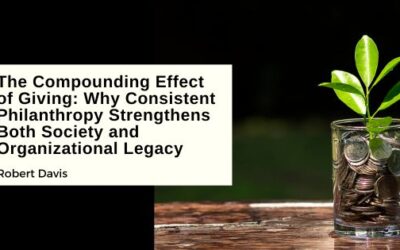
The Compounding Effect of Giving: Why Consistent Philanthropy Strengthens Both Society and Organizational Legacy
Rethinking Philanthropy as a Long-Term Strategy Philanthropy is often viewed as a discretionary act, something separate from core business strategy. In reality, consistent and intentional giving operates much like long-term investing. When approached with discipline...
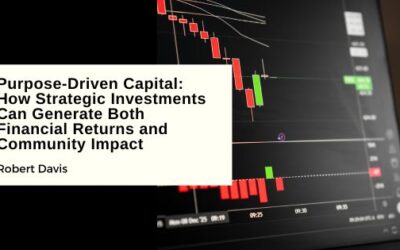
Purpose-Driven Capital: How Strategic Investments Can Generate Both Financial Returns and Community Impact
In today’s complex financial landscape, the measure of a successful investment extends far beyond short-term gains. For forward-thinking investors, true success lies in generating not only financial returns but also meaningful community impact. Robert Davis of RD...
Building for Durability: Why Resilient Organizations Outperform in Uncertain Markets
Uncertainty has become a constant in modern markets. Economic shifts, technological disruption, regulatory changes, and global events routinely test organizations in ways that were once considered rare. In this environment, success is no longer defined by rapid growth...
Decision Quality Over Decision Speed: How Thoughtful Leadership Reduces Risk and Improves Outcomes
In fast-moving organisations, leaders often feel pressure to act quickly. Speed is equated with confidence, and hesitation is sometimes mistaken for weakness. Yet history and experience repeatedly show that the quality of a decision matters far more than how fast it...

The Long Game of Leadership: Why Strategic Patience Outperforms Reactive Decision-Making
In a business environment defined by speed and constant pressure, leaders are often rewarded for rapid responses and quick wins. Yet the organizations that endure and outperform are usually led by individuals who embrace strategic patience. Strategic patience is not...

Strength Through Structure: How Governance Frameworks Drive Consistent Performance
In a constantly evolving business landscape, leaders face increasing pressure to deliver predictable results while navigating complexity, risk, and rapid change. The organizations that succeed are not always the fastest or the most innovative. More often, they operate...

From Complexity to Clarity: Why Simplified Systems Drive Scalable Growth
As businesses grow, complexity naturally increases. Teams expand, product lines diversify, and processes multiply. While growth is positive, unmanaged complexity can become a barrier, slowing decision-making, creating inefficiencies, and undermining strategic focus....

Strategic Consistency: How Staying the Course Builds Compounding Advantage
In a fast-moving business environment, leaders are often tempted to chase every opportunity, pivot at the first sign of disruption, or react to competitor moves. While agility is important, overreacting to short-term trends can dilute focus and erode long-term value....

Execution at Scale: How Process Discipline Sustains Growth Beyond the Startup Phase
Every successful business eventually faces the same challenge: what worked during the scrappy startup stage rarely scales seamlessly. In the early days, flexibility and speed fuel growth. But as companies scale, the lack of standardized processes can create friction,...

Focus as a Force Multiplier: Why Concentrated Strategy Outperforms Diversified Distraction
In today’s fast-moving markets, it is tempting for leaders to pursue every opportunity that comes their way. New markets, product extensions, and partnerships can all seem attractive, especially when competitors are expanding aggressively. Yet the reality is that...